
NZ Builders Talk: When Your LBP Is About to Expire Mid-Build, What’s the Smart Way to Finish?
- Newsletter
-
Feb 04
- Share post

At some point, most builders slow down.
Some close their business. Some take fewer jobs. Some decide they’re done with contracting altogether. Others focus on their own home after years of building for everyone else.
And that’s usually when licensing starts to feel less important.
You’re no longer quoting jobs. You’re not advertising. You’re not chasing clients. So when the renewal notice arrives, it feels unnecessary. Just another fee for something you barely use.
That’s exactly where one builder found himself recently.
The Question That Started the Discussion
In the NZ Builders Facebook group, a former contractor shared his situation.
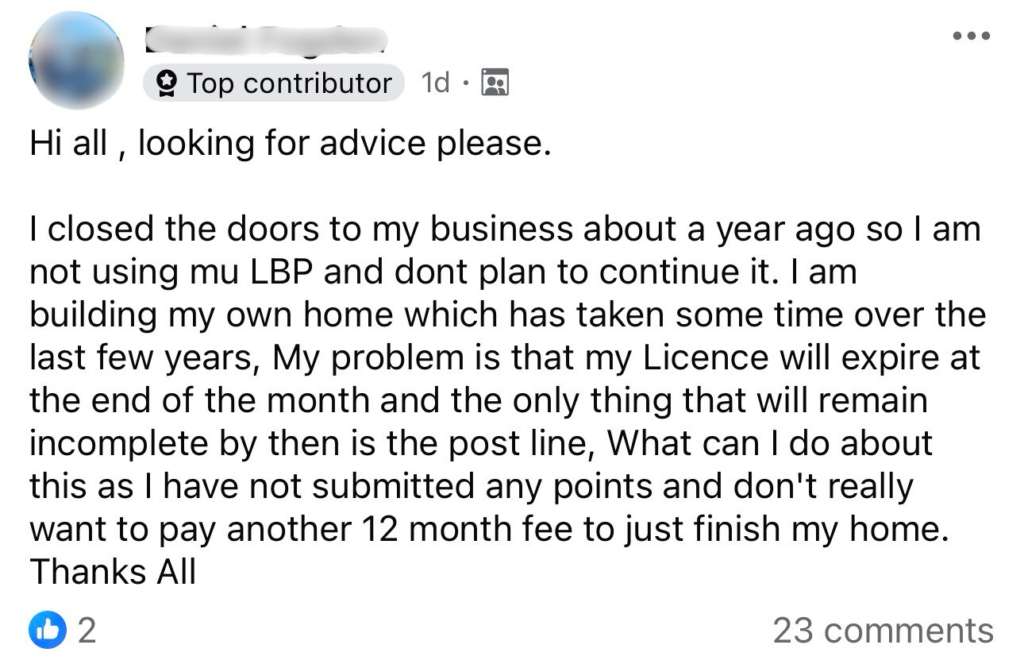
He had closed his business about a year earlier. He didn’t plan to return to full-time work. He was building his own home slowly, over several years, fitting the work around life and other commitments.
Most of the house was done.
Only one item remained—setting the final post line.
But his Licensed Building Practitioner registration was about to expire. He hadn’t logged any competency points. And he didn’t want to pay another full year’s fee just to finish one small task.
So he asked the group what he should do.
It was a simple, honest question—and one many builders quietly think about.
Why ‘Just One More Job’ Feels So Reasonable
From the outside, the builder’s thinking made sense.
Why pay hundreds of dollars for a licence you no longer “use”?
Why go through admin when the job is nearly finished?
Why keep something active when you’re basically retired?
For builders who have spent years dealing with paperwork, compliance, and renewals, the temptation to finally let it go is strong. It feels like closing a chapter.
But as the replies showed, that mindset can be risky.
How the Conversation Quickly Shifted
Within hours, dozens of builders had responded.
And while the tone varied (some blunt, some joking, some detailed), the underlying message was surprisingly consistent.
Most experienced builders said the same thing in different ways:
Just renew it.
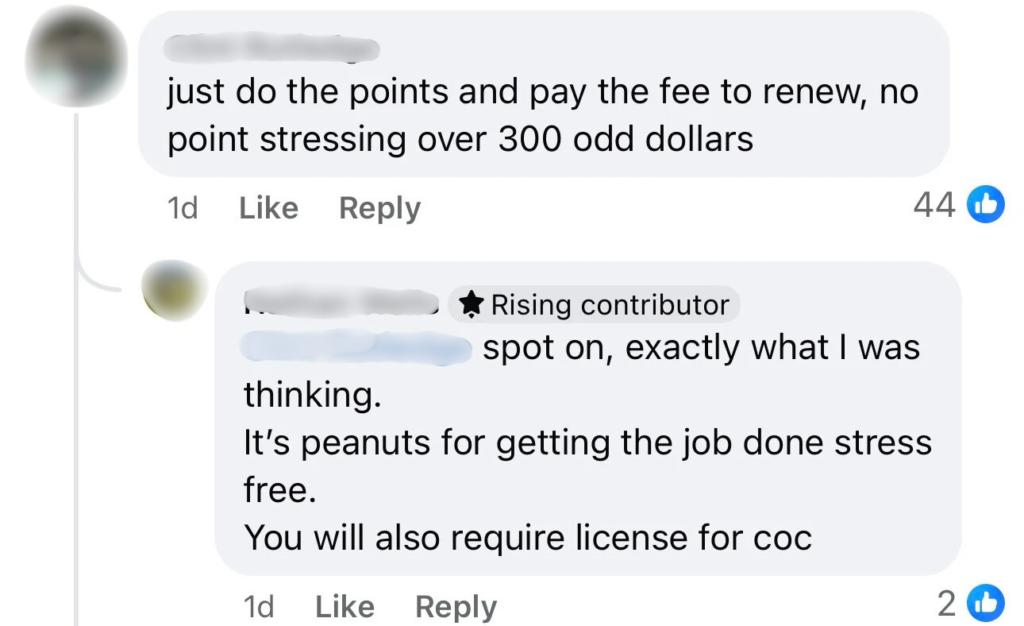
Not because they enjoyed paying fees. Not because they loved bureaucracy. But because they had seen what happens when people don’t.
The Case for Simply Renewing
Many commenters pointed out that renewal is usually far easier than people expect.
For most builders, it involves submitting a few competency points, paying the annual fee, and updating details online. It can often be done in less time than a site visit.
Several builders mentioned that they had tried to “save” the fee in the past, only to lose far more time and money dealing with councils, consultants, or delays later.
In their view, renewal isn’t about money. It’s about buying certainty.
Once your licence is current, no one questions the work. Inspections proceed smoothly. Paperwork aligns. Records stay clean.
You finish the job and move on.
Why Some Consider Owner-Builder Status Instead
A few builders suggested another option: switching to owner-builder status.
In New Zealand, homeowners can legally manage and carry out certain work themselves, as long as they accept responsibility and complete the required declarations.
For some people, this works.
But several commenters warned that it isn’t a shortcut. it’s a trade-off.
When you register as an owner-builder, you take full liability. The project is no longer recorded as LBP-led work. That information stays on file. Future buyers, insurers, or lenders may see it.
It doesn’t automatically cause problems. But it can raise questions later.
For builders who want a clean professional record, that matters.
The Reality of Getting Someone Else to Sign Off
Another idea raised was getting another LBP to sign off the final work.
On paper, this seems logical. If you’re no longer licensed, why not bring in someone who is?
In practice, this is rarely simple.
Most LBPs are reluctant to sign work they didn’t supervise from the beginning. When they put their name on a document, they accept responsibility for everything underneath it.
If they haven’t seen framing, foundations, or earlier stages, they’re taking a risk.
Those who do agree usually insist on inspections, reports, and sometimes remedial work. They charge for their time. They may delay the project.
By the end, many builders realise they’ve spent more than the renewal fee.
When “Workarounds” Enter the Conversation
Like many online discussions, a few comments suggested bending the system.
Ideas like booking inspections before expiry, using existing numbers, or “sending it and seeing what happens” appeared briefly.
Other builders immediately pushed back.
They’d seen how these approaches play out.
Records don’t disappear. Systems cross-check. Councils keep data. When something doesn’t match, it gets flagged — sometimes years later, when a house is being sold or refinanced.
What feels like a harmless shortcut today can become a serious headache tomorrow.
The Long View: What Happens After You’re “Done”
One of the most valuable parts of the discussion came from retired and semi-retired builders.
They weren’t thinking about this project.
They were thinking about the next ten years.
They pointed out that life changes.
A family member might need help. A friend might ask for work. You might take on a small renovation. You might consult. You might return part-time.
Once your licence lapses, coming back is harder. Reapplying takes time. Evidence is needed. Fees increase.
Keeping it current preserves options, even if you never use them.
Why Documentation Matters More Than Many Realise
Several builders also highlighted something younger tradespeople often underestimate.
Paperwork follows the house, not the builder.
When a property is sold, lawyers often request building records. When insurance claims are made, documentation is reviewed. When disputes arise, files are examined.
If something is missing, unclear, or inconsistent, it becomes your problem — even years later.
A clean paper trail protects you long after you’ve moved on.
The Real Cost of “Saving” the Renewal Fee
When you add everything up, trying to avoid renewal rarely saves money.
Builders who take alternative routes often end up paying for:
- Consultant advice
- Extra inspections
- Legal reviews
- Delays in settlement
- Additional reports
What started as an attempt to save a few hundred dollars becomes a four-figure problem.
That’s why so many commenters dismissed the cost argument entirely.
To them, the fee was insignificant compared to the risk.
The Emotional Side Nobody Talks About
Behind many of these decisions is fatigue.
After decades in the industry, many builders are simply tired of compliance. Tired of forms. Tired of renewals. Tired of proving themselves.
When someone says, “I’m done,” it’s often emotional as much as practical.
But experienced builders know that emotional decisions are rarely good regulatory decisions.
Closing things properly matters.
What Most Experienced Builders Would Do
By the end of the thread, a clear pattern had emerged.
Builders who had been through disputes, sales, claims, and council reviews all said the same thing:
Renew. Finish. Document. Walk away clean.
No loose ends.
No “what ifs.”
No regrets later.
When Owner-Builder May Still Make Sense
That doesn’t mean renewal is the only valid option.
Owner-builder status can work if:
You understand the legal consequences.
You don’t plan to sell soon.
You’ve checked with council.
You’re comfortable with full liability.
But it should be a considered decision—not a rushed one.
Final Thoughts
This discussion wasn’t really about one post line. It was about professionalism. It was about how builders choose to close chapters in their career.
Do you cut corners at the end? Or do you finish properly and protect your name?
Most experienced builders choose the second option.
Not because it’s exciting, but because it works.
Have You Faced a Similar Situation?
If you’ve dealt with licensing, council, or compliance issues on your own build, share your experience in the group.
Your story might save someone else months of stress.