
NZ Builders Talk: Getting Off the Tools Without Losing Your Place in the Trade
- Newsletter
-
Feb 23
- Share post

Most builders think about it eventually.
Your body gets sore. The days feel longer. You still enjoy the work, but not the physical toll that comes with it. At some point, the question comes up:
How do you step away from the tools without stepping out of the industry entirely?
That question sparked a wide-ranging discussion in the NZ Builders Facebook group recently, after one builder asked how others had progressed their careers beyond hands-on site work.
He wasn’t rushing anything. He wasn’t burned out. He was simply doing what many builders start doing in their 30s, 40s, or 50s—looking ahead.
The replies told a bigger story than just “what course should I do?”
The Question That Opened the Door
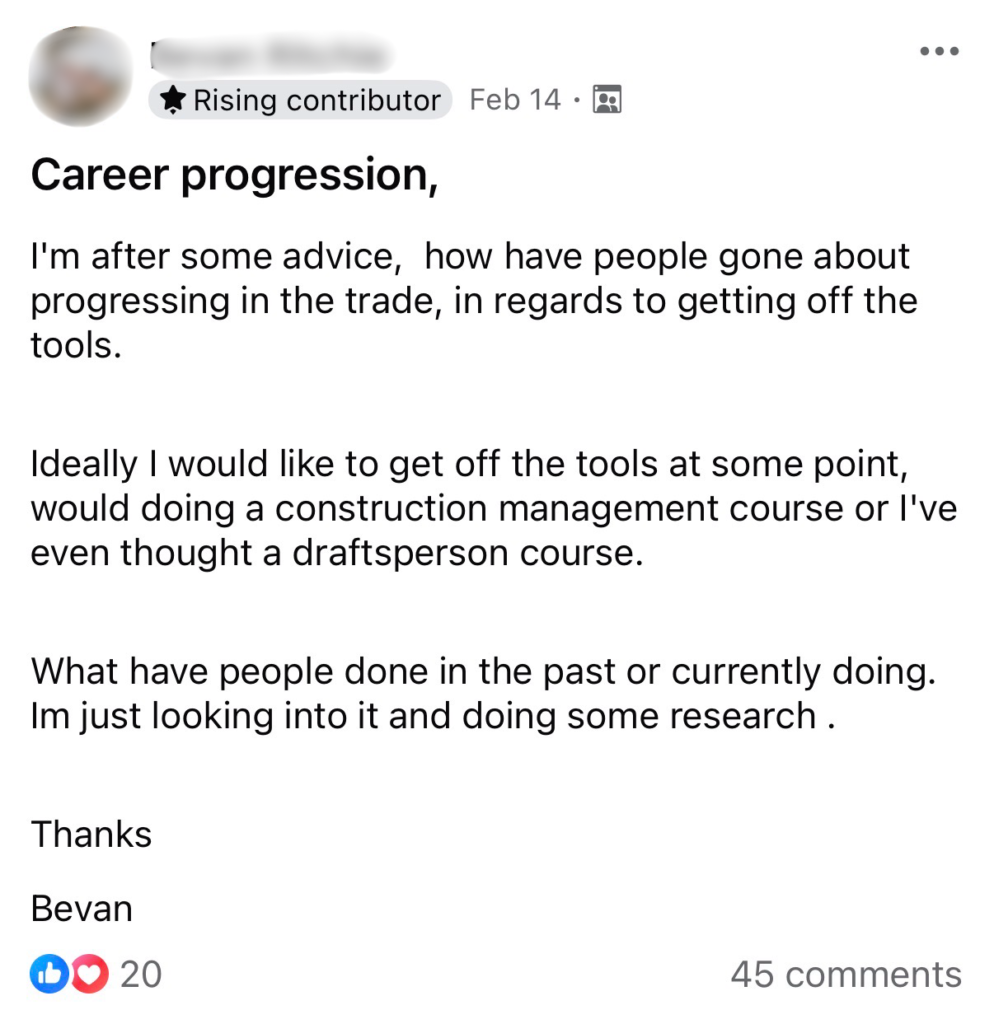
The builder explained that, long-term, he’d like to get off the tools. He was considering a construction management course, and even floated the idea of training as a draftsperson.
He wasn’t asking for shortcuts. He was researching options.
That alone struck a chord.
Within days, dozens of builders shared what they’d done—or wished they’d done sooner.
Staying on the Tools, But Changing the Role
One of the strongest themes was this: getting off the tools doesn’t have to mean leaving site work.
Several older builders talked about shifting into mentor-style roles. Still onsite. Still involved. Just no heavy lifting, no grinding days, and no pressure to prove anything physically.
One builder in his late 50s summed it up clearly. He still works, but only on jobs he enjoys. He spends more time guiding younger tradies than swinging a hammer. After four decades in the trade, that knowledge has value—and passing it on has become the job.
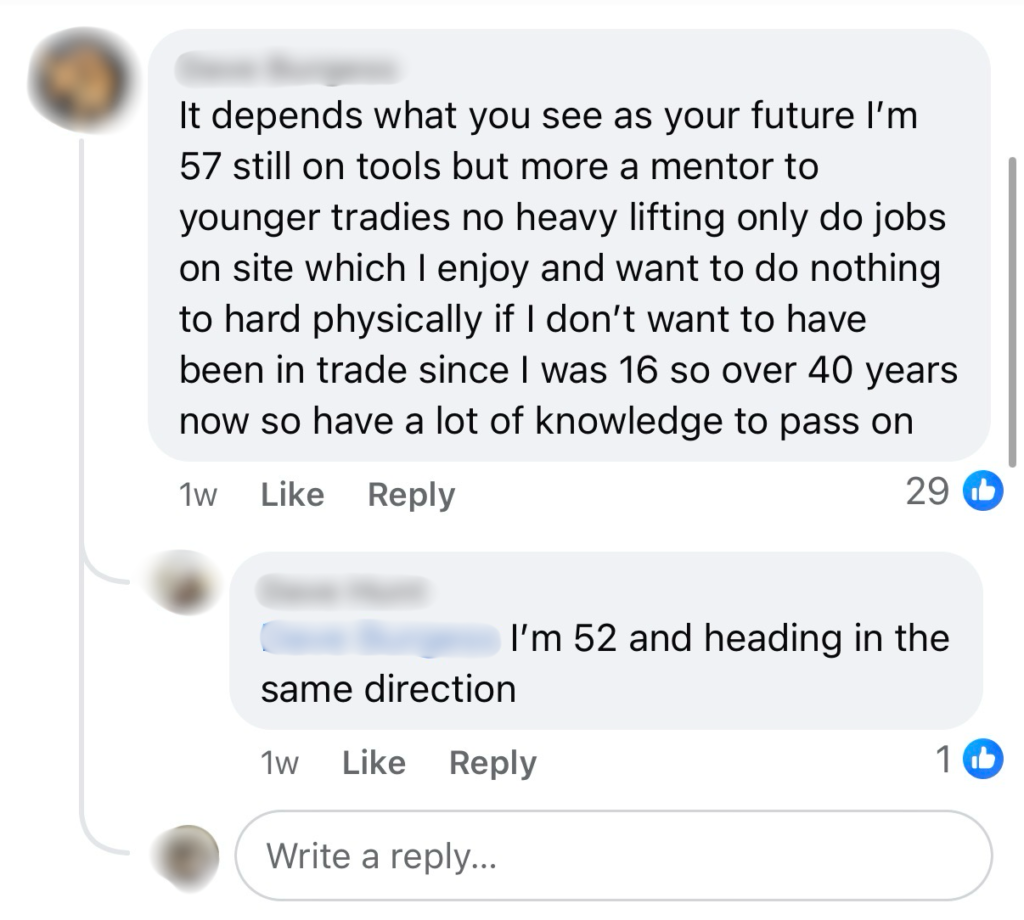
Others chimed in saying they were heading the same way. Not out of the industry, just into a different lane.
Site Management: The Most Common Transition
If there was one role that came up again and again, it was site manager.
Builders who’d moved into site management described it as the most natural progression. You stay onsite. You understand the work. You’re coordinating, organising, and solving problems—but you’re no longer doing the labour yourself.
For many, the timing mattered. Several said their mid-30s to early-40s felt like the right window to make that shift. Enough experience to command respect, but still early enough to reset physically.
Formal qualifications helped, but they weren’t always the entry ticket. A few people landed site management roles purely off experience, then studied part-time to strengthen their position later.
The consensus was clear: qualifications open doors faster, but real site experience keeps you in the room.
Studying While Still Working
A recurring piece of advice was not to stop working altogether just to study.
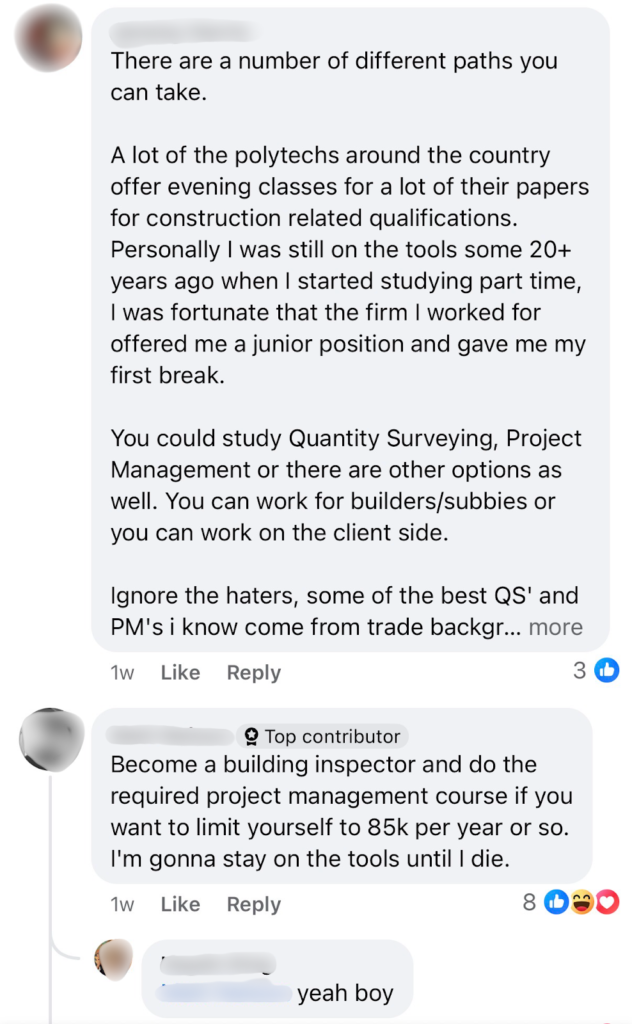
Builders who had successfully transitioned often studied part-time—nights, weekends, or through polytechs offering flexible papers. That way, they stayed relevant, kept earning, and built credibility in parallel.
Project management, quantity surveying, and construction management were the most commonly mentioned pathways.
One commenter made an important point: some of the best QSs and PMs he knew came from a trade background. Understanding how work actually happens on site gives you an edge that textbooks can’t.
Office Roles Aren’t for Everyone
Not everyone wanted a desk.
A few builders were very clear that full-time office work would “do their head in.” For them, staying connected to site (even in a management role) was non-negotiable.
This came up more than once, and it highlights something important: career progression doesn’t look the same for everyone. For some, success is a senior management role. For others, it’s simply staying useful without destroying their body.
The Hard Truth About Staying Too Long
Among the more blunt replies were warnings from older builders who wished they’d stepped back earlier.
Back pain. Neck issues. Long-term injuries. Decades of wear catching up fast.
One comment cut through the thread with brutal honesty: “Get off the tools as soon as you can.”
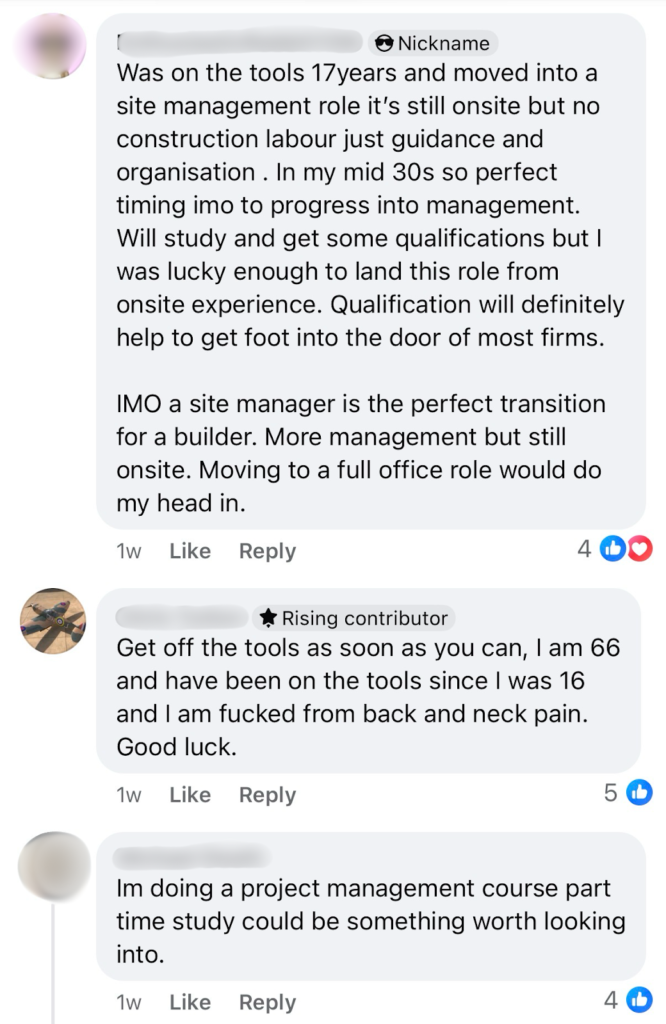
It wasn’t said with bitterness. It was said as advice.
And it landed.
Money, Reality, and Trade-Offs
Not all transitions are equal financially.
One builder joked that becoming a building inspector would cap earnings well below what experienced builders can make on the tools. Others shrugged that off, pointing out that quality of life matters too.
That tension ran quietly through the thread: money versus longevity. Income versus sustainability.
There wasn’t a single “right” answer—but there was a shared understanding that ignoring the question entirely has consequences.
What This Conversation Really Shows
This wasn’t a thread about courses.
It was about control.
Builders thinking ahead. Choosing how long they want to stay physical. Deciding how they want the next 10–20 years of their working life to look.
Some will stay on the tools forever. Some will move into management. Some will teach, inspect, design, or consult.
What mattered most was this: none of the builders who had already transitioned said they regretted doing it.
The only regret came from those who waited too long.
Final Thoughts
Getting off the tools doesn’t mean leaving the trade.
For many builders, it’s just the next stage—one that protects their body, uses their experience, and keeps them involved in the work they know best.
The key is thinking about it early, while you still have choices.
If you’re starting to ask the question, you’re probably right on time.