
NZ Builders Talk: How Small Tradies Are Handling Quotes and Invoices Today

Running a small trade business used to be simple.
A notebook in the ute. A calculator. Maybe a printed invoice pad. Quotes written by hand and totals worked out on paper.
For years, that system worked perfectly well for many sole tradies.
But things are changing.
A recent post in the New Zealand Builders Facebook group asked a simple question that sparked a surprisingly practical discussion:

How are sole tradies and small builders handling quotes and invoices these days?
Still paper and notes, or using software?
The answers showed how the industry is gradually moving from paper to digital—sometimes willingly, sometimes reluctantly.
The Slow Shift From Paper to Digital
One builder shared that he’s currently transitioning from paper records to digital tools.

After decades of doing things the same way, the change hasn’t been easy. He admitted he’s in his mid-50s and not enjoying the transition process at all.
That comment struck a chord.
Many tradespeople built their businesses long before construction software became common. Switching systems now can feel like learning an entirely new way of running the job.
But despite the frustration, more builders are making the move.
Not necessarily because they want to—but because the industry increasingly expects it.
Accounting Software Is Becoming the Base System
Several builders said they now manage their invoices through Xero, which has become one of the most widely used accounting platforms among New Zealand trades.
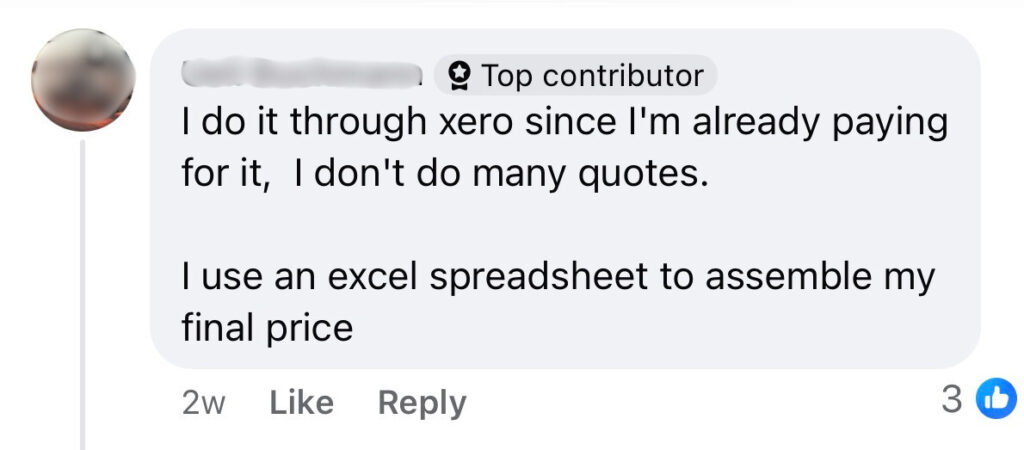
For some, the approach is simple.
Quotes are prepared using spreadsheets or other tools, and once the price is finalised, the invoice itself is generated through the accounting software.
This setup keeps bookkeeping clean while allowing builders to price jobs in whatever way works best for them.
It’s not a perfect system, but it’s practical.
And for many sole operators, practicality wins every time.
Job Management Software Is Gaining Ground
Beyond basic accounting tools, many builders mentioned dedicated trade software platforms.
Programs like Tradify, Fergus, BuildaPrice, and BuildExact came up repeatedly in the conversation.

These tools go beyond invoices. They allow builders to manage:
- Job costing
- Quotes and estimates
- Materials tracking
- Scheduling
- Client communication
For small businesses juggling multiple projects, these systems can simplify a lot of the administrative work that traditionally happens after hours.
But they also require time to learn, which is why adoption often happens gradually.
Supplier Integration Is Making Pricing Easier
One interesting insight from the discussion was how some builders integrate supplier pricing directly into their quoting systems.
One builder explained that his company partners with ITM, which provides a spreadsheet listing their top-selling materials each month.
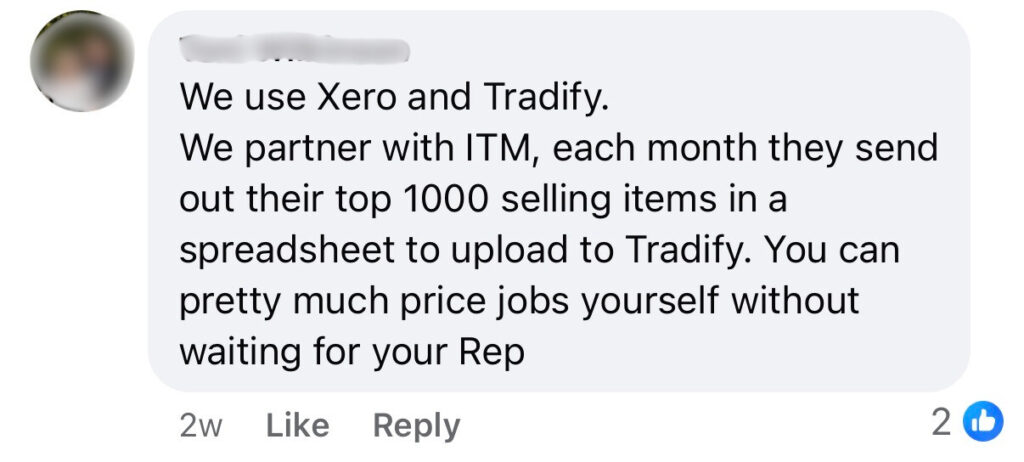
Those prices can then be uploaded into Tradify.
Once the materials database is updated, builders can price jobs much faster without waiting for supplier quotes or manually entering every item.
For builders who prepare multiple quotes each week, that kind of automation can save hours.
Not Everyone Needs a Full System
Despite the growing list of software tools available, some builders said they prefer keeping things simple.
A few mentioned that they don’t produce a large number of quotes, so complex job-management software isn’t necessary.
Instead, they rely on spreadsheets or basic systems alongside their accounting software.
For small operations, that balance often makes sense.
The goal isn’t to adopt every new tool—it’s to reduce admin time without adding unnecessary complexity.
The Real Challenge Isn’t the Software
One theme ran quietly through the entire discussion.
The hardest part of moving digital isn’t the software itself.
It’s the habit change.
Builders who have spent decades managing jobs one way suddenly need to learn new systems, new interfaces, and new workflows.
For some, the shift happens quickly. For others, it takes months—or longer.
But the direction of the industry seems clear.
More clients expect digital invoices. More accountants recommend integrated systems. More builders are finding that software helps keep track of the growing paperwork involved in running a trade business.
What This Conversation Shows
The discussion didn’t produce a single “best” method for quoting and invoicing.
Instead, it revealed something more realistic.
Every builder develops their own system based on the size of their business, the number of jobs they handle, and how comfortable they are with technology.
Some stick with spreadsheets and accounting software.
Others go fully digital with job-management platforms.
And a few are still making the transition from notebooks and paper files.
All of them are simply trying to find the most efficient way to run the business side of the trade.
Final Thoughts
For sole tradies and small builders, quoting and invoicing often happens after the tools are packed away for the day.
That’s why the system matters.
The right setup doesn’t just produce invoices—it saves time, reduces mistakes, and makes running the business easier.
Whether that system is a spreadsheet, accounting software, or a full job-management platform, the goal is the same:
Spend less time on paperwork and more time building.