
NZ Builders Talk: What Responsibility Does an LBP Really Carry on Site?
- Newsletter
-
Mar 10
- Share post
The Licensed Building Practitioner (LBP) scheme has been part of New Zealand’s building industry for over a decade.
Most builders know the basics: certain types of residential construction work are classified as Restricted Building Work (RBW), and that work must be carried out or supervised by an LBP.
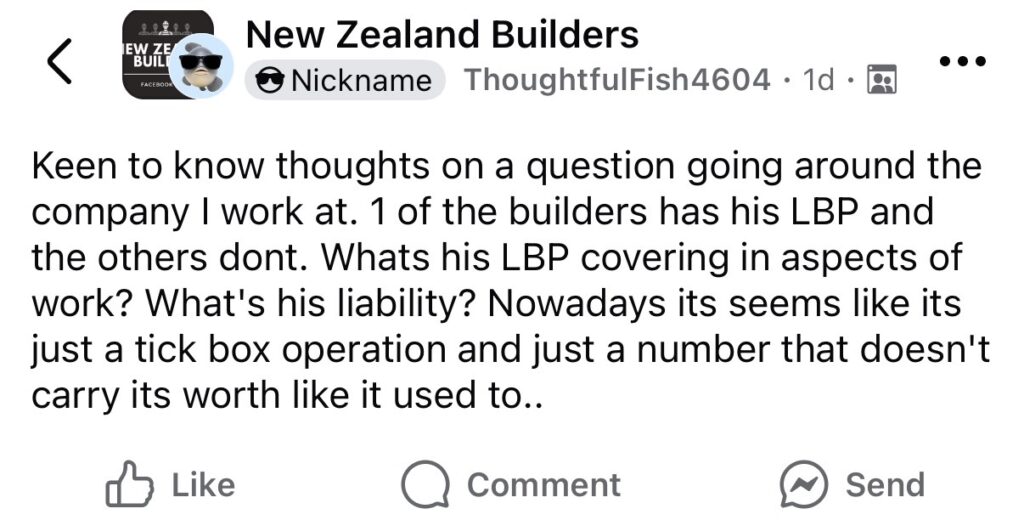
But a recent discussion in the New Zealand Builders Facebook group showed that many people are still unclear about what an LBP actually covers on a job site.
The question that started the conversation was simple.
A builder asked what happens when one person on a team holds an LBP and the others do not. What exactly does the LBP’s licence cover, and what liability do they carry?
The responses revealed both confusion and some important realities about the role.
The Question Many Builders Are Asking
The original poster said that within his company, one builder holds an LBP while the rest of the team do not.
That raised a concern.
If only one person on the team is licensed, what responsibility does that person actually take on? Is the licence simply a requirement for paperwork, or does it carry real legal weight?
Some builders in the thread suggested that the licence often feels like a “tick-box” requirement today.
Others quickly pushed back on that idea.
The Responsibility That Comes With an LBP
Several experienced builders pointed out that an LBP carries significant responsibility when they undertake or supervise restricted building work.

Under the LBP scheme, a licensed builder must ensure that any restricted building work they carry out—or supervise—is done correctly and complies with the Building Code.
That responsibility does not disappear just because other workers are involved.
If an LBP supervises non-licensed builders carrying out restricted work, they are still responsible for ensuring the work meets the required standard.
For larger teams, that responsibility can be substantial.
Records of Work: The Key Document
One of the most important obligations mentioned in the discussion was the Record of Work (ROW).
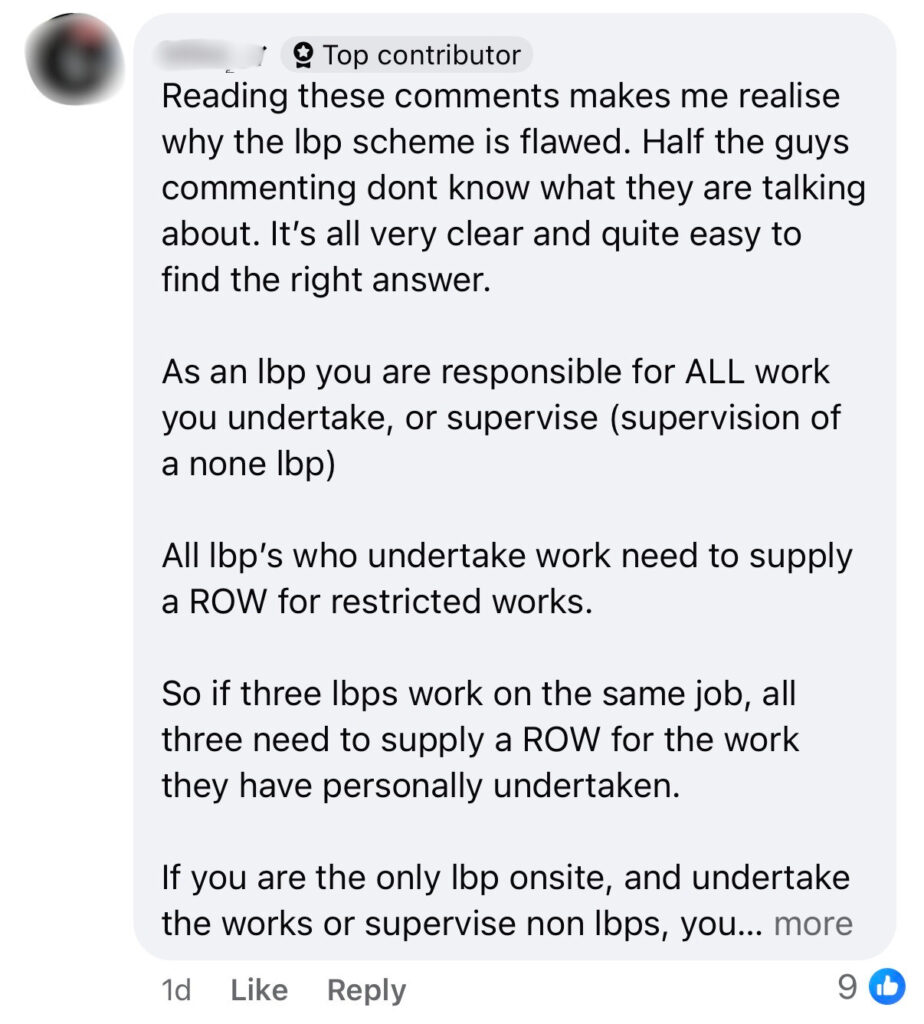
Every LBP who carries out or supervises restricted building work must provide a Record of Work once the job is completed.
This document confirms which parts of the project the LBP was responsible for.
If multiple LBPs work on the same job, each of them must submit a Record of Work covering the specific tasks they personally carried out or supervised.
This system is designed to create a clear paper trail showing who was responsible for which parts of the build.
Liability Can Last for Years
Another point raised in the conversation was the long-term liability associated with signing off building work.
One commenter noted that if an LBP signs off work, they can remain liable for that work for many years.

Under New Zealand’s building laws, defects or issues that arise later can potentially lead back to the people responsible for the construction.
For LBPs supervising large teams or working across multiple projects, that responsibility is not something to take lightly.
The Role of the Company
Some builders in the discussion argued that if an LBP is working as an employee within a company, the company itself should carry much of the liability.
While that can be true in certain contractual situations, others pointed out that the LBP’s professional responsibility still applies to the work they undertake or supervise.
That means the licence itself carries obligations regardless of the company structure.
This is one reason why many experienced builders are careful about what work they agree to sign off.
Why Confusion Still Exists
One interesting aspect of the discussion was how differently people understood the LBP system.
Some commenters said the rules are very clear and easy to look up.
Others admitted that many builders still misunderstand the details, particularly around supervision and liability.
That confusion can lead to risky situations on site, especially when only one person in a crew holds the licence required to carry out restricted work.
What This Conversation Shows
The discussion highlighted something important about the LBP scheme.
The licence is not simply a number attached to a builder’s name.
It represents accountability.
When a licensed builder undertakes or supervises restricted building work, they are effectively confirming that the work meets professional and regulatory standards.
That responsibility follows the work long after the tools are packed away.
Final Thoughts
The LBP system was designed to improve building quality and accountability across New Zealand’s residential construction industry.
But conversations like this show that many builders still have questions about how it works in practice.
For anyone holding an LBP—or considering applying for one—the key takeaway is simple:
The licence brings both opportunity and responsibility.
And understanding exactly what that responsibility involves is essential for anyone working on restricted building work.