NZ Builders Talk: Are You Passing Fuel Costs On or Just Wearing It?
- Newsletter
-
Mar 29
- Share post

Fuel Is Part of the Job—Whether You Like It or Not
From a business standpoint, fuel is not optional. It sits alongside labour and materials as one of the core costs of getting a job done. Builders don’t have the luxury of working from one fixed location, and even a simple project can involve multiple trips. That makes fuel less of an overhead and more of a direct operational cost.
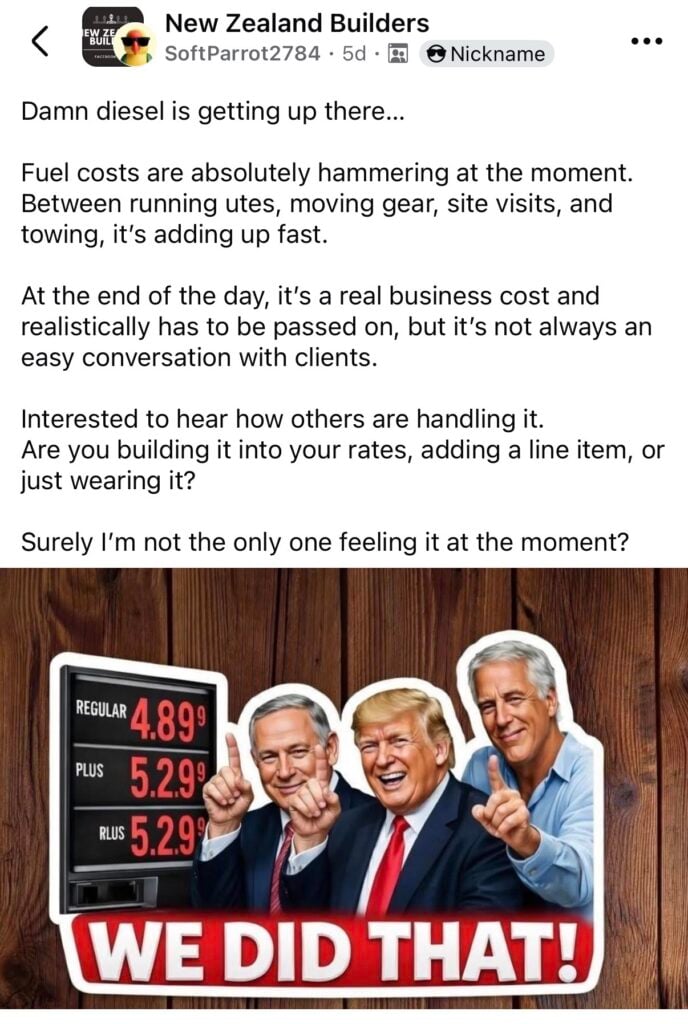
The original post laid this out clearly. The builder acknowledged that fuel is a real business cost that, in theory, should be passed on. But in practice, it’s not always that straightforward. Pricing isn’t just about covering costs—it’s also about staying competitive and keeping clients comfortable. That tension is what made the discussion interesting, because it showed how different builders are navigating the same problem in different ways.
The Straightforward View: Pass It On
Some builders had a very clear stance on this. Fuel is a cost of doing business, and like any other cost, it needs to be covered. If suppliers increase their prices, builders don’t expect them to absorb it. The same logic applies here.

The Reality Check: Clients Don’t Always Accept It
Even if passing on costs makes sense on paper, the reality with clients can be very different. Pricing in construction is often sensitive, and even small changes can affect how a quote is perceived. Builders are not just competing on quality—they’re also competing on price, and that makes every adjustment feel risky.
A Shift in Behaviour Instead of Pricing
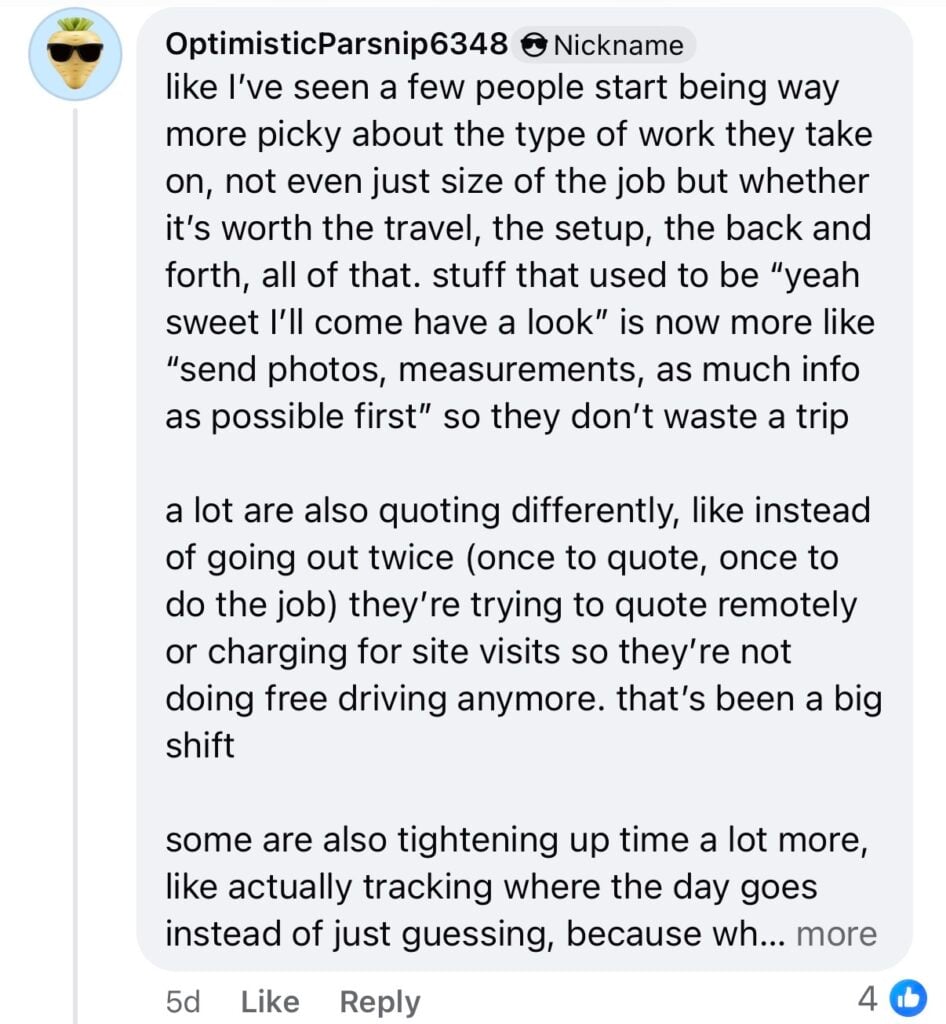
Rather than adjusting pricing directly, many builders are changing how they work. This approach focuses on reducing unnecessary travel and making better use of time. It’s not about charging more—it’s about doing less unpaid driving.
The Gap Between Small and Large Operators
Fuel costs don’t hit everyone the same way. Larger companies often have more flexibility, both financially and operationally. They can spread costs across multiple projects and absorb short-term increases without feeling it as much.
The 'Absorb It' Approach
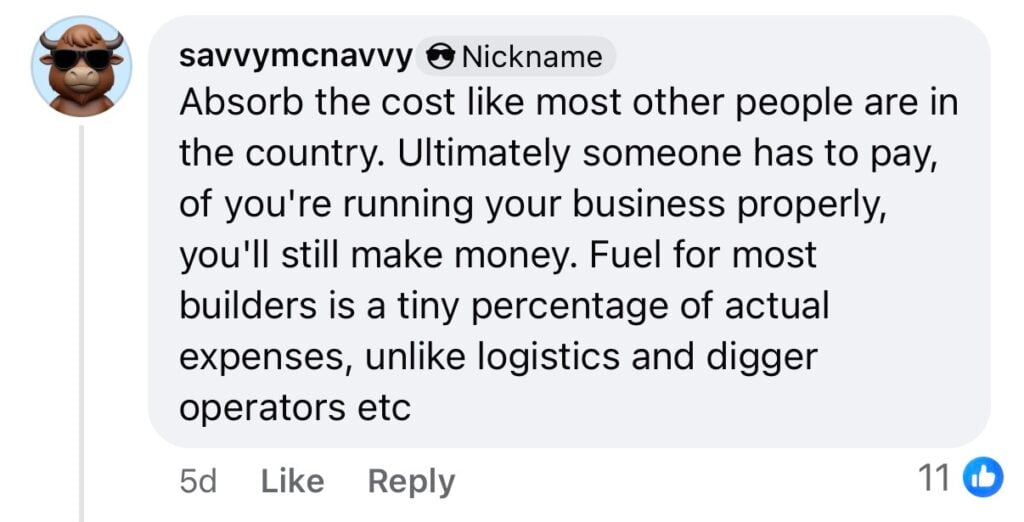
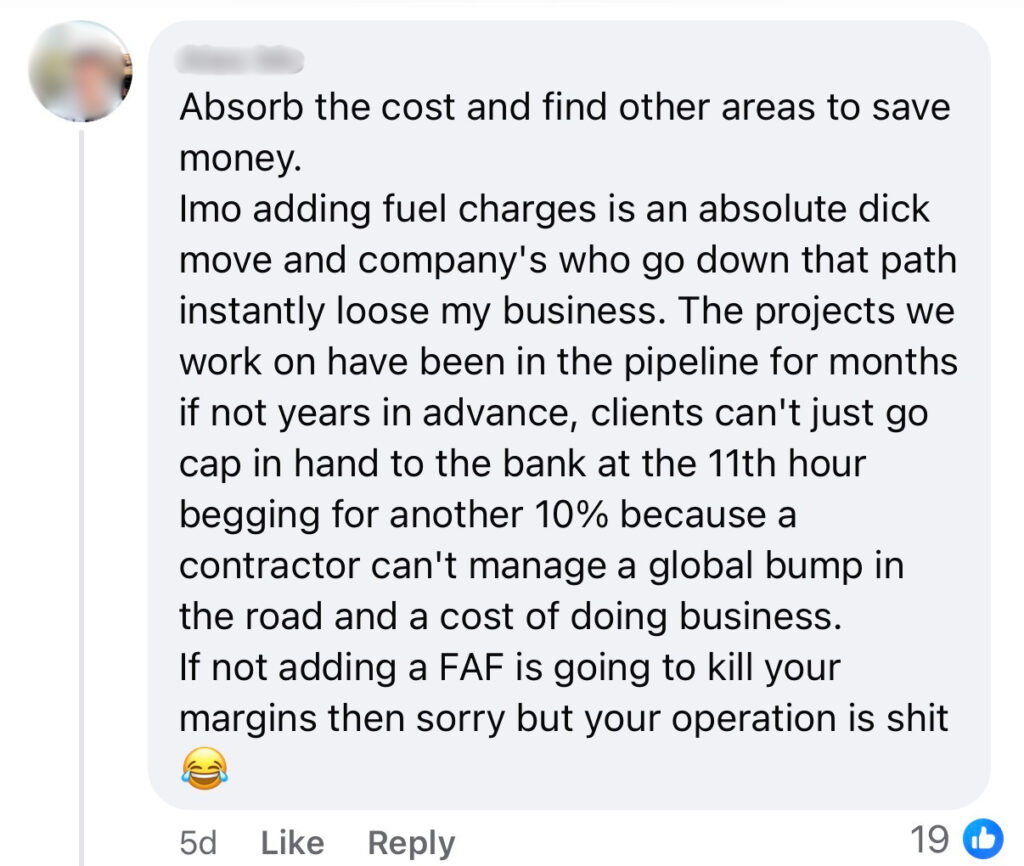
Not everyone is convinced that passing on fuel costs is the right move. Some builders prefer to keep their pricing stable and find ways to absorb the increase internally. This approach focuses on improving efficiency and cutting unnecessary expenses.